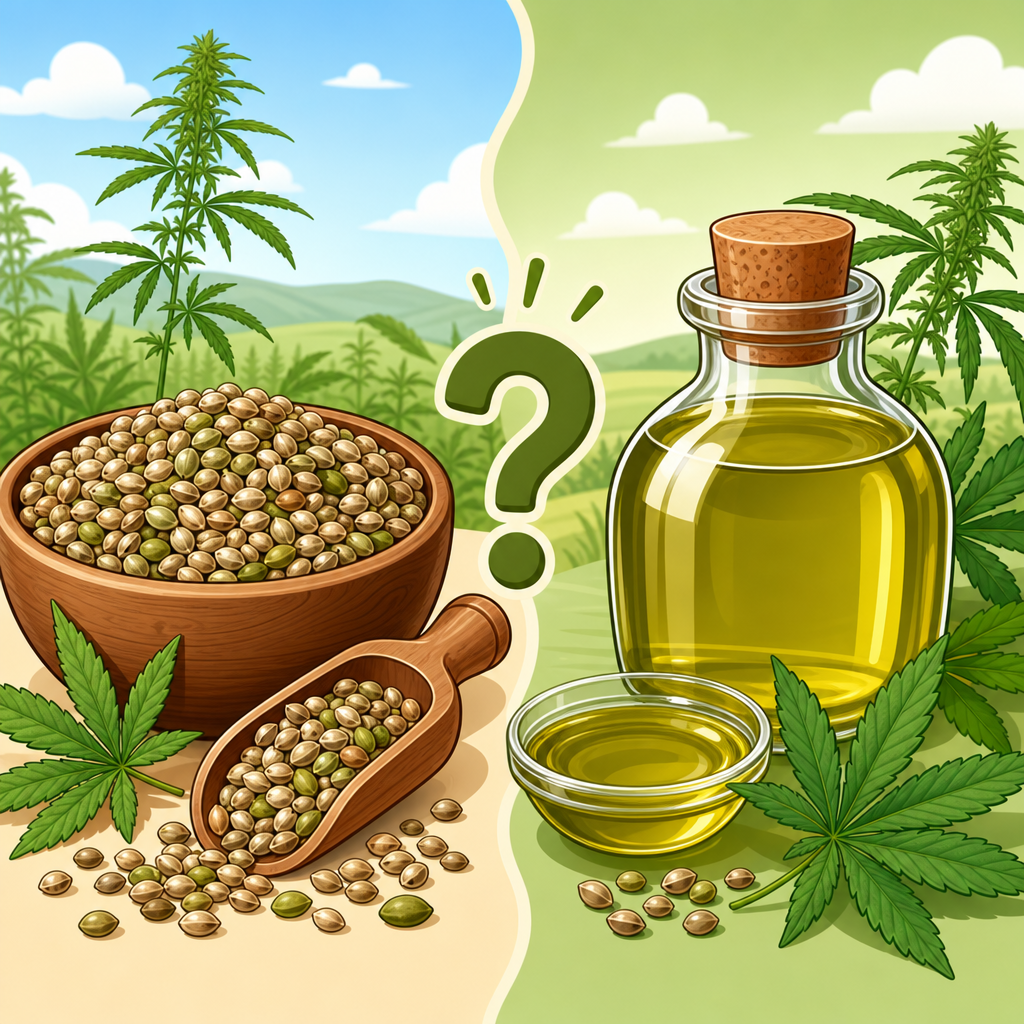
Hemp seeds and hemp oil come from the same plant, but they are not the same food, they do not deliver the same nutrition, and they are not used in the same way in a kitchen or wellness routine. In consumer education, this distinction matters because shoppers often see similar packaging, broad health claims, and overlapping terms such as hemp hearts, hemp seed oil, cold-pressed hemp oil, and full-spectrum hemp extract. After years of working with natural food labeling and comparing ingredient panels for clients, I have seen this confusion lead to poor purchasing decisions, wasted money, and unrealistic expectations. Understanding hemp food starts with one simple idea: hemp seeds are a whole food ingredient, while hemp oil is a processed fat extracted from the seed, and each has different strengths.
Hemp refers to varieties of Cannabis sativa cultivated for fiber, grain, and non-intoxicating extracts. For food use, the focus is usually on the seed. Whole hemp seeds have a hard outer shell, while shelled seeds are often sold as hemp hearts. Hemp oil, when discussed as a food, usually means oil pressed from hemp seeds. It is important to separate this from hemp extracts that contain cannabinoids, because those products follow different standards, ingredient rules, and use cases. If a shopper wants protein, fiber, and minerals, seeds are the more complete option. If the goal is a source of polyunsaturated fat for dressings or finishing, hemp seed oil is the more direct choice. Knowing the difference helps you read labels accurately, compare products fairly, and choose the form that fits your diet.
What Hemp Seeds Are and What Hemp Oil Is
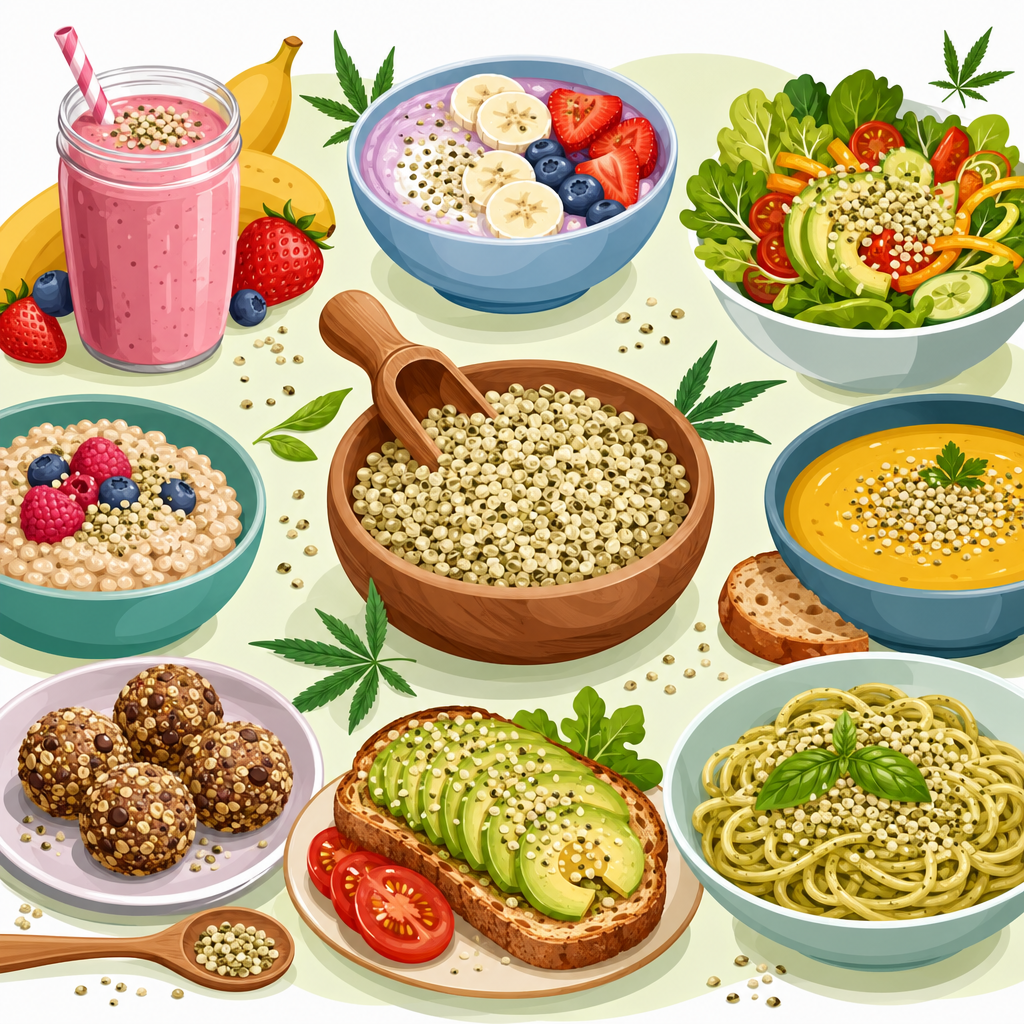
Hemp seeds are the edible seeds of the hemp plant. Whole seeds include the hull, which contributes fiber and a slightly crunchier texture. Hemp hearts are the same seeds with the outer shell removed, giving a softer bite and milder flavor. In retail food, you will usually find them in bags or tubs near chia, flax, pumpkin seeds, and other pantry staples. They are eaten directly, blended into smoothies, stirred into oatmeal, baked into bars, or used as a topping for yogurt, salads, and grain bowls. Because they remain close to their natural state, they carry a broader nutrient profile than oil alone.
Hemp oil is made by pressing the seeds to separate out the fat. A high-quality culinary hemp seed oil is typically cold-pressed, filtered, and bottled in dark containers to reduce oxidation. It has a green-gold color and a grassy, nutty flavor that works best in uncooked applications. Unlike refined oils designed for high-heat frying, hemp seed oil is prized for flavor and fatty acid composition, not for heat stability. This is where many consumers go wrong: they buy hemp oil expecting it to behave like avocado or canola oil, then damage the oil by overheating it. In practical terms, hemp seeds are a food ingredient with protein, fiber, and fat, while hemp oil is mostly just the fat portion extracted from that seed.
Nutritional Differences That Matter
The most important nutritional difference is completeness. Hemp seeds provide protein, fat, and, when the hull is present, fiber. They also contribute minerals such as magnesium, phosphorus, iron, zinc, and manganese. Hemp hearts lose most of the fiber found in the shell, but they still offer substantial protein and healthy fats. In my experience reviewing product nutrition panels, shelled hemp seeds generally deliver around 9 to 10 grams of protein and about 14 to 15 grams of fat per 3 tablespoon serving, though values vary by brand. That makes them useful for people trying to add plant protein without relying only on powders.
Hemp oil, by contrast, is a concentrated fat source. It contains negligible protein and no fiber. Its value lies in its fatty acid profile, especially linoleic acid, an omega-6 fat, and alpha-linolenic acid, an omega-3 fat. Hemp seed oil also contains gamma-linolenic acid in smaller amounts, which is one reason it is often discussed in relation to skin and inflammation support. However, nutrition context matters. Oil is calorie-dense and should be treated like other culinary oils: useful, but portion-sensitive. If someone wants satiety, texture, and a wider spread of nutrients, seeds outperform oil. If someone wants to enrich a dressing with delicate polyunsaturated fats, oil is efficient and convenient.
| Product | Main Nutrients | Best Uses | Key Limitation |
|---|---|---|---|
| Whole hemp seeds | Fat, protein, fiber, minerals | Cereal, baking, toppings, snacks | Chewier texture from hull |
| Hemp hearts | Fat, protein, minerals | Smoothies, yogurt, sauces, porridge | Lower fiber than whole seeds |
| Hemp seed oil | Polyunsaturated fats, vitamin E compounds | Dressings, dips, finishing oil | Not suitable for high heat |
Taste, Texture, and Cooking Performance
Flavor is often the deciding factor for repeat purchase. Hemp seeds have a mild, nutty taste that sits somewhere between sunflower seeds and pine nuts, though less sweet than the former and less resinous than the latter. Whole seeds add crunch, while hemp hearts become creamy when blended. I often recommend hemp hearts to people who dislike gritty protein additives because they disappear more smoothly into sauces, soups, and smoothies than many plant powders. In a pesto alternative, for example, hemp hearts can replace some or all of the pine nuts while also boosting protein.
Hemp oil tastes more assertive. Good bottles have a fresh, grassy, slightly earthy note. If the oil tastes bitter, paint-like, or stale, oxidation may be the issue. This sensitivity comes from the same polyunsaturated fats that make the oil nutritionally interesting. As a rule, hemp oil should not be your everyday sauté oil. Use it the way you would use a finishing walnut oil: drizzle it over roasted vegetables after cooking, whisk it into vinaigrette, fold it into hummus, or add a spoonful to a cold soup. Seeds are flexible in both raw and cooked foods, but the oil is best protected from heat, air, and light.
How to Read Labels and Avoid Common Confusion
The hemp category is full of labels that look similar but mean very different things. “Hemp seeds” means the edible seed. “Hemp hearts” means shelled seeds. “Hemp seed oil” should indicate oil pressed from the seeds. “Hemp extract” or “full-spectrum hemp extract” points to a different class of product and should not be confused with a culinary seed oil. This distinction matters because one product is bought as a food ingredient and the other may be sold in tinctures, softgels, or specialized wellness formats. If the bottle has a Supplement Facts panel rather than a Nutrition Facts panel, that is a sign you are no longer looking at a conventional food oil.
Storage instructions also reveal quality. Reputable hemp seed oil brands usually recommend refrigeration after opening and package the oil in dark glass or opaque containers. For seeds, check for harvest or best-by dates, origin information, and whether the product is organic, non-GMO, or tested for heavy metals. Hemp is an agricultural crop, so sourcing and post-harvest handling affect quality. In consumer education work, I advise people to scan the ingredient list for one-ingredient simplicity. A bag of hemp hearts should contain hemp hearts, not fillers. A bottle of hemp seed oil should specify cold-pressed or expeller-pressed seed oil, not vague language that leaves the source unclear.
Health Benefits, Limits, and Evidence-Based Use
Hemp foods have real nutritional value, but they are often marketed with a level of certainty the evidence does not support. The strongest case for hemp seeds is straightforward: they are a nutrient-dense plant food that can help increase intake of unsaturated fats, plant protein, and minerals. For people eating less animal protein, adding hemp hearts to meals is a practical move because they require no preparation and improve both nutrient density and texture. They also fit well into Mediterranean-style and plant-forward eating patterns. That is a meaningful benefit, and it does not require exaggerated claims.
For hemp seed oil, the discussion usually centers on essential fatty acids and skin support. There is plausible reasoning behind this because skin barrier function and inflammatory pathways are influenced by fat intake, and hemp oil contains linoleic acid and alpha-linolenic acid in a useful balance. Still, it is not a cure-all. It will not compensate for an otherwise poor diet, and results from adding one tablespoon a day may be subtle. People on medication, those managing medical conditions, or anyone considering concentrated hemp products should speak with a clinician. As with any food, benefit depends on consistent use, overall dietary pattern, portion size, and product quality.
How to Choose the Right Option for Your Needs
The best choice depends on what you want the product to do. If your priority is protein, choose hemp hearts or whole hemp seeds. If your priority is fiber, whole seeds are stronger than shelled seeds. If your goal is to make a salad dressing or finish a dish with delicate fats, choose hemp seed oil. Budget matters too. Seeds often provide more nutritional return per serving because they deliver multiple macronutrients, while oil is narrower in function. For families trying to simplify pantry decisions, seeds usually earn the permanent spot first, and oil comes second as a specialty item.
There are also practical lifestyle factors. Athletes may prefer hemp hearts in oats or recovery bowls for easy protein and calories. People with chewing difficulties may favor hemp hearts over whole seeds because the texture is softer. Home cooks who enjoy making sauces can blend hemp hearts with lemon, garlic, water, and herbs into a dairy-free cream. Shoppers interested in sustainability often appreciate hemp as a crop because it can be grown for multiple uses, including fiber and food, though environmental impact still depends on farming practices, processing, transportation, and packaging. The key is matching the format to the need rather than assuming every hemp product serves the same purpose.
Hemp seeds and hemp oil differ in exactly the ways consumers most need to understand: nutrition, culinary use, storage, label language, and realistic health value. Seeds are the more complete food. They provide protein, healthy fats, minerals, and, in whole form, fiber. Hemp hearts offer convenience and versatility with a softer texture and mild taste. Hemp seed oil is a specialized ingredient prized for its fatty acid profile and fresh, nutty flavor, but it is not interchangeable with all-purpose cooking oils and should not be mistaken for hemp extracts. Once you separate these categories, shopping becomes easier and product claims become easier to judge.
For most households, the smartest starting point is simple. Keep hemp hearts on hand for everyday meals, add whole seeds if you want more fiber and crunch, and buy hemp seed oil only if you will use it cold in dressings, dips, or finishing applications. Read labels carefully, store products correctly, and choose quality over hype. That approach gives you the real benefits of hemp food without confusion. If you are building a better pantry, start with one hemp product that fits your routine, use it consistently, and expand from there as your needs become clearer.
Frequently Asked Questions
What is the main difference between hemp seeds and hemp oil?
The biggest difference is that hemp seeds are a whole food, while hemp oil is a pressed fat or extract. Hemp seeds come from the hemp plant and are eaten as seeds, either whole, hulled, or sold as hemp hearts. They provide a mix of protein, fiber, healthy fats, vitamins, and minerals. Hemp oil, by contrast, usually refers to oil pressed from the seeds, though some products use similar wording for hemp extracts made from other parts of the plant. That is where confusion often starts.
In practical terms, hemp seeds contribute texture, substance, and a broader nutritional profile to meals. You can sprinkle them on yogurt, blend them into smoothies, stir them into oatmeal, or use them in baking. Hemp seed oil is mainly used as a source of fat and is valued for its delicate, nutty flavor. It works well in dressings, dips, and finishing applications, but it does not replace the nutritional role of the seeds themselves.
It also helps to read labels carefully. “Hemp hearts” means hulled hemp seeds. “Hemp seed oil” or “cold-pressed hemp oil” usually means oil made by pressing the seeds. “Full-spectrum hemp extract” usually refers to a different category entirely, typically made from flowers, leaves, and aerial parts of the plant rather than the seeds. So although the terms sound related, they may represent very different products with different uses and expectations.
Are hemp seeds and hemp seed oil nutritionally the same?
No. They come from the same plant, but they do not offer the same nutrition. Hemp seeds contain protein, fat, and, if the seed is not fully hulled, some fiber as well. They also naturally provide minerals such as magnesium, phosphorus, iron, zinc, and manganese. Because they are a complete food ingredient, they deliver multiple nutrients together in one package. This makes them especially useful for people looking to add plant-based protein and nutrient density to meals and snacks.
Hemp seed oil is much narrower nutritionally. It is primarily fat, especially polyunsaturated fats, including omega-6 and omega-3 fatty acids. Those fats can be a useful part of a balanced diet, but the oil does not provide the same protein content, and it contains little to no fiber. Most of the minerals and other components you would get from eating the whole or hulled seed are either absent or present only in minimal amounts in the oil.
That is why hemp seeds and hemp seed oil should not be treated as interchangeable. If your goal is to add protein and whole-food nutrition, the seeds are the better fit. If your goal is to use a flavorful oil for cold dishes or to incorporate specific fatty acids into your diet, hemp seed oil may be the more appropriate choice. Understanding that distinction prevents one of the most common shopping mistakes: assuming the oil is simply a concentrated version of the seed. It is not.
Can hemp seeds and hemp oil be used the same way in cooking?
Not really. Hemp seeds are far more versatile as a food ingredient. You can eat them raw, blend them into sauces, stir them into grain bowls, add them to energy bites, or use them in baking. Hemp hearts in particular have a soft texture and mild, slightly nutty taste, so they work well in both sweet and savory dishes. They can add body to recipes in a way that oil alone cannot.
Hemp seed oil is better thought of as a finishing oil. Because it is rich in delicate unsaturated fats, it is generally not the best choice for high-heat cooking. Excess heat can damage flavor and reduce quality, so it is commonly used in salad dressings, drizzled over vegetables, blended into pesto, or added to foods after cooking. If a bottle specifically says cold-pressed hemp oil, that usually signals a product intended for minimal processing and lower-heat use.
This difference matters in the kitchen. If a recipe calls for hemp seeds, substituting hemp oil will change texture, structure, and nutrition. If a recipe calls for oil, adding seeds will not provide the same moisture or fat function. In short, one is an ingredient that adds bulk and nourishment, while the other is an oil that adds richness and flavor. They complement each other, but they do not do the same job.
Is hemp seed oil the same as CBD oil or full-spectrum hemp extract?
No, and this is one of the most important distinctions for consumers. Hemp seed oil is made by pressing the seeds of the hemp plant. It is a culinary oil and nutrition product. CBD oil or full-spectrum hemp extract is typically made from the flowers, leaves, and other aerial parts of the plant, not the seeds. These products are marketed for entirely different purposes and are labeled differently, even though the packaging can sometimes look similar.
Hemp seeds themselves do not naturally contain meaningful amounts of CBD. As a result, ordinary hemp seed oil should not be expected to function like a cannabinoid extract. If a product says “hemp seed oil,” shoppers should understand that it is primarily a food oil. If it says “full-spectrum hemp extract,” “broad-spectrum hemp extract,” or “CBD,” it belongs to a separate category with separate labeling, formulation, and usage expectations.
The safest approach is to ignore front-label buzzwords and go straight to the ingredient panel and supplement facts or nutrition facts. A true hemp seed oil product should list hemp seed oil as the main ingredient and present standard food-based nutrition information. A cannabinoid product will usually identify hemp extract and may specify CBD content in milligrams. This label-reading habit helps consumers avoid confusing a pantry ingredient with a specialized wellness product.
How should shoppers choose between hemp seeds and hemp oil?
The right choice depends on what you actually want the product to do. If you want a nutrient-dense food that adds protein, healthy fats, and versatility to meals, choose hemp seeds or hemp hearts. They are ideal for smoothies, breakfast bowls, salads, homemade granola, and plant-based cooking. If you want a flavorful oil to use in dressings, dips, and cold preparations, choose hemp seed oil. If you are specifically shopping for a hemp extract product, make sure the label clearly says so rather than assuming all hemp products are equivalent.
It is also smart to compare packaging details. Check whether the product is seeds, hulled seeds, seed oil, or extract. Look at the ingredient list, serving size, storage instructions, and nutrition facts. Hemp seed oil is often best stored away from heat and light, and some products benefit from refrigeration after opening. Hemp seeds also last longer when stored properly in a cool, dry place, especially once opened.
Finally, be wary of broad health claims that blur categories. A food product should be evaluated like a food product, based on its nutrient profile and ingredient quality. An extract should be evaluated according to its formulation, testing, and intended use. When shoppers understand the difference between hemp seeds and hemp oil, they make better decisions, spend more wisely, and use each product in the way it was actually meant to be used.