
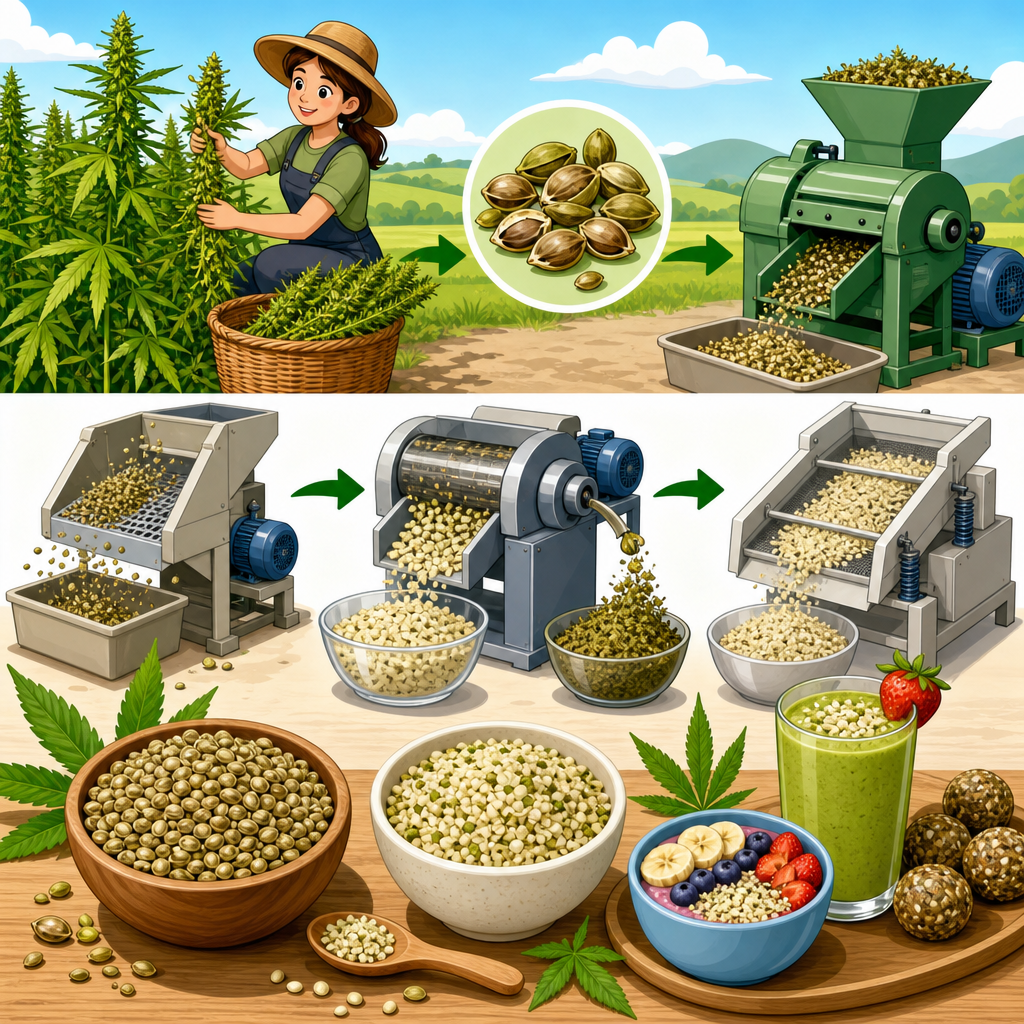
Hemp seeds have moved from niche health stores into mainstream kitchens because they deliver concentrated nutrition in a compact form, and understanding how hemp seeds are processed for food helps consumers judge quality, safety, flavor, and value. In food use, “hemp seeds” usually means the small edible seeds of industrial hemp, a variety of Cannabis sativa grown for fiber, grain, and oil rather than intoxicating use. The seed itself contains a hard outer hull and a soft inner kernel, often sold as hemp hearts when the hull is removed. Processing is the controlled series of steps that take harvested hemp grain from the field to cleaned, tested, packaged foods such as whole seeds, hulled seeds, protein powder, flour, and cold-pressed oil. That process matters because each decision affects shelf life, nutrient retention, taste, texture, and compliance with food safety rules. I have worked with ingredient specifications and label reviews for seed-based foods, and hemp stands out because consumers often ask the same practical questions: Is it safe, does it contain THC, why do some products taste grassy or bitter, and what makes one format better for smoothies, baking, or salads? A useful answer starts at the farm and follows the seed through harvesting, cleaning, dehulling, pressing, milling, testing, and packaging.
For a consumer education hub, hemp food is best understood as a category rather than a single product. Whole hemp seeds include the shell and offer more fiber but a firmer bite. Hemp hearts are softer, milder, and easier to sprinkle into yogurt, oatmeal, and grain bowls. Hemp seed oil is valued for its fatty acid profile, especially polyunsaturated fats including linoleic acid and alpha-linolenic acid. Hemp protein powder and hemp flour are made from the solid material left after oil extraction, then milled to different textures and protein levels. These foods can support plant-forward diets, but they are only as good as the raw material and process controls behind them. Reputable manufacturers use traceable lots, foreign material removal, validated sanitation, and laboratory testing for microbes, heavy metals, pesticides, and cannabinoid compliance. Consumers do not need to memorize every technical term, but knowing the basic path from seed to shelf makes product labels easier to interpret and helps separate careful manufacturing from vague marketing.
Harvesting and receiving: where food-grade processing begins
Food-grade hemp processing begins long before a package reaches the store. Industrial hemp grown for grain is typically harvested when seeds mature on the plant and moisture is reduced enough for safe handling, often with combines similar to those used for other small grains. Timing is critical. If harvested too early, kernels can be immature and lower in oil yield. If harvested too late, shattering losses rise and seeds can be exposed to excess weather, raising the risk of spoilage. After combining, the grain is moved quickly to drying or conditioned storage because warm, moist seed is vulnerable to mold growth and oxidation. In my experience reviewing grain specifications, this early handling stage predicts many downstream quality outcomes, especially flavor stability and microbial results.
At intake, processors evaluate incoming lots for moisture, odor, color, insect activity, and contamination from stones, stems, and weed seeds. Moisture is one of the most important numbers because it determines storage stability. Seed that is too wet can heat in storage, encouraging mold and off-flavors. Each lot is assigned an identifier for traceability, which is essential if a recall or customer complaint occurs later. Processors may also screen for residual THC compliance, depending on jurisdiction and end market. While hemp food is not intended to be intoxicating, regulators still require products to remain under legal thresholds. Good receiving practices form the first quality gate: poor raw material cannot be fixed by later polishing, and strong processors reject suspect loads rather than blending quality problems away.
Cleaning, drying, and storage for safety and consistency
Once accepted, hemp seeds are cleaned using a sequence of mechanical steps designed to remove foreign material without damaging the kernel. Equipment often includes scalpers for larger debris, aspirators for dust and lighter plant matter, magnets for ferrous fragments, destoners, and sieves calibrated to seed size. Optical sorters may be used to reject discolored seeds or remaining contaminants. These systems are common in modern grain handling because physical contamination is a major food safety and quality issue. A few stones or metal fragments can create obvious hazards, but even lighter material such as stems can affect taste, oil quality, and consumer perception. Clean seed also moves more predictably through dehullers and presses, reducing wear on equipment.
Drying follows if moisture is above the target for storage or further processing. The goal is to lower moisture gently enough to avoid scorching the seed or accelerating rancidity. Because hemp seed contains a meaningful amount of oil, heat management matters. Overheated seed can develop cooked or bitter notes and lose some sensory freshness. Processors therefore favor controlled air drying and monitor temperature closely. Once stable, seeds are stored in cool, dry conditions, often in bins or food-grade totes protected from humidity, pests, and light. Oxygen exposure is another concern because unsaturated fats oxidize readily. A processor with disciplined storage practices will rotate inventory by lot, document hold times, and sample seed periodically for moisture, microbial status, and sensory changes before releasing it to the next stage.
Dehulling turns whole hemp seeds into hemp hearts
Dehulling is the step most consumers associate with premium edible hemp because it produces hemp hearts, the soft cream-colored kernels used in smoothies, salads, sauces, and snack blends. The challenge is to crack and remove the fibrous hull while preserving the oil-rich kernel. Processors use impact or abrasion-based dehullers tuned to seed size, moisture, and variety. If the seed is too dry, kernels may fracture excessively. If it is too moist, hull separation becomes inefficient. After cracking, air classification and screening separate lighter hull fragments from heavier kernels. Additional polishing or gravity separation may improve visual cleanliness.
The quality target for hemp hearts is straightforward: low hull residue, minimal broken pieces, mild nutty flavor, and stable color. Broken kernels are not necessarily unsafe, but they expose more surface area to oxygen and can shorten shelf life. Some processors package hearts under nitrogen flush to slow oxidation, especially for retail pouches. This is one reason a fresh bag tastes sweet and nutty while an old or poorly stored bag can taste painty or bitter. Dehulling also changes nutrition in practical terms. Whole seeds provide more fiber because the hull remains intact, while hearts offer a softer texture and more immediate culinary versatility. Neither form is inherently superior; the better choice depends on how the food will be used.
Pressing, milling, and refining into oil, protein, and flour
After cleaning or dehulling, hemp seeds can be processed into several food ingredients. Cold pressing is the standard route for hemp seed oil. Seeds are fed into a screw press that squeezes out oil while leaving behind a press cake. “Cold-pressed” generally means temperature is controlled to preserve flavor and delicate fatty acids, though exact definitions vary by producer and market. The resulting oil is filtered to remove fine solids and then stored away from light, heat, and oxygen. Unlike highly refined commodity oils, hemp seed oil is often sold as a minimally processed culinary oil, so freshness is central. It is usually recommended for dressings, dips, and finishing rather than high-heat frying because polyunsaturated fats are less stable at elevated temperatures.
The press cake is valuable, not waste. It can be milled into hemp protein powder or hemp flour, depending on the target specification. Protein powder usually involves finer milling and, in some cases, additional sifting to raise protein concentration relative to fiber. Hemp flour may be milled to retain more fiber and a broader nutritional profile, making it useful in pancakes, muffins, crackers, and blended baking applications. Because hemp lacks gluten, it behaves differently from wheat flour and is commonly used as a partial replacement rather than a one-to-one swap. Product developers often combine it with oat, rice, or wheat flour to balance structure and nutrition. From a processing perspective, particle size, residual oil level, and moisture control determine flowability, flavor release, and shelf stability across these formats.
Quality testing, compliance, and what labels should tell you
Strong hemp food processing includes laboratory verification at multiple points. Microbiological testing checks for organisms such as Salmonella and indicator counts relevant to seed products. Chemical testing may include heavy metals, pesticide residues, peroxide value for oil oxidation, and cannabinoid levels to confirm regulatory compliance. Allergen control is also part of the program, even though hemp itself is not one of the major regulated allergens in many markets. Cross-contact with sesame, tree nuts, soy, dairy, or gluten-containing grains can occur if facilities handle multiple ingredients. A serious processor uses sanitation controls, environmental monitoring where appropriate, and documented preventive controls aligned with recognized food safety systems such as HACCP and preventive controls frameworks.
Consumers can learn a great deal from the package. The ingredient list should be short and clear for plain hemp foods: hemp seeds, hulled hemp seeds, hemp seed oil, or hemp protein. Storage instructions matter because these products are sensitive to oxidation; “refrigerate after opening” is often a sign of realism, not weakness. Best-by dates, lot codes, organic certification if claimed, and country of origin can also help. Below is a practical comparison of common formats and processing differences.
| Product | Main processing step | Best use | Key quality cue |
|---|---|---|---|
| Whole hemp seeds | Cleaning and drying | Granola, baking, cereal | Clean shell, no dusty odor |
| Hemp hearts | Dehulling and separation | Salads, yogurt, smoothies | Mild nutty taste, low hull residue |
| Hemp seed oil | Cold pressing and filtration | Dressings, dips, finishing | Fresh aroma, dark bottle, cool storage |
| Hemp protein powder | Press cake milling and sifting | Shakes, oatmeal, baking blends | Even texture, no rancid note |
| Hemp flour | Press cake milling | Muffins, pancakes, crackers | Fine grind, balanced earthy flavor |
Flavor, nutrition, and the processing choices consumers notice most
The most noticeable effects of hemp seed processing are flavor, texture, and shelf life. Fresh hemp hearts should taste mild, slightly sweet, and nutty, somewhere between sunflower kernels and pine nuts. Whole seeds are more robust and fibrous. Oil should smell fresh and grassy-nutty, not harsh. When consumers describe hemp as bitter, fishy, or paint-like, oxidation is often the reason. Unsaturated fats react with oxygen over time, and poor temperature control accelerates that process. Packaging in opaque materials, flushing with nitrogen, and recommending refrigeration after opening are practical ways processors protect quality.
Nutritionally, processing changes emphasis rather than destroying value. Dehulling lowers fiber but improves texture and digestibility for many uses. Pressing concentrates fat into oil and shifts protein and fiber into the press cake, which is why hemp protein powders and flours have different nutrition panels from whole seeds. Serving sizes also matter. A spoonful of hemp hearts adds protein and fats, but it is not equivalent to a full protein supplement dose. Consumers should read labels in context and compare products by intended use, not broad claims. If the goal is a salad topper, flavor and freshness dominate. If the goal is baking, grind size and functional performance matter more.
How to buy, store, and use hemp foods with confidence
Buying good hemp food starts with matching the format to the task. Choose hemp hearts for easy everyday use, whole seeds for extra fiber and crunch, oil for cold applications, and protein or flour for blended recipes. Look for reputable brands that identify the product clearly, provide lot coding, and give realistic storage guidance. Once opened, protect hemp foods from heat, air, and light. Keep oil refrigerated and tightly sealed. Store hearts and whole seeds in a cool pantry for short periods or in the refrigerator for longer freshness. If a product smells sour, metallic, or like old paint, discard it.
Understanding how hemp seeds are processed for food gives consumers a practical framework for every purchase. Harvest timing protects raw quality. Cleaning and drying prevent contamination and spoilage. Dehulling creates convenient hemp hearts. Pressing and milling turn the same seed into oil, protein, and flour with distinct culinary roles. Testing and traceability confirm safety and compliance. Together, these steps explain why two hemp products can look similar on a shelf yet perform very differently at home. Use this hub as your starting point for understanding hemp food, then apply the basics when reading labels, comparing brands, and choosing the right format for your kitchen. Better process knowledge leads to better buying decisions, fresher flavor, and more confidence using hemp as a versatile everyday ingredient.
Frequently Asked Questions
What does the food-processing journey of hemp seeds look like from harvest to packaged product?
Food-grade hemp seed processing typically begins with harvesting mature industrial hemp plants grown specifically for grain or oilseed use. After harvest, the seeds are separated from the plant material and moved through careful cleaning steps to remove stalk fragments, leaves, dust, stones, and other field debris. This stage matters more than many consumers realize, because the initial quality of the incoming seed strongly affects the flavor, shelf life, and safety of the final food product. Once cleaned, the seeds are dried to a stable moisture level so they can be stored without encouraging mold growth, spoilage, or quality loss. Proper drying is essential: if seeds remain too moist, they can deteriorate quickly; if handled too roughly, the delicate seed can crack or lose quality.
From there, processors sort the seeds by size, density, and overall condition, often removing immature or damaged seeds before deciding what final product they will become. Whole hemp seeds may be packaged with the hull intact, while other batches are mechanically dehulled to produce the soft inner kernel often sold as hemp hearts. Some seeds are cold-pressed for hemp seed oil, and the remaining press cake can be milled into protein-rich powders or flour-like ingredients. Throughout these steps, reputable manufacturers focus on sanitation, traceability, and controlled handling to minimize contamination and preserve nutrients. By the time hemp seeds reach a retail package, they have usually gone through multiple checkpoints designed to improve consistency, food safety, and consumer appeal.
How are hemp seeds cleaned and dehulled for food use?
Cleaning and dehulling are two of the most important processing steps because they determine both safety and eating quality. Cleaning usually starts with screening equipment that separates hemp seeds from larger and smaller foreign materials. Air aspiration may be used to lift away lightweight dust, chaff, and plant residue, while gravity tables or density separators can help remove stones, damaged seeds, or other unwanted particles. Magnets and metal detectors may also be part of the line to reduce the risk of metal contamination. These systems are designed not only to improve appearance, but also to produce a more uniform raw material for the next stage of processing.
Dehulling removes the hard outer shell from the edible inner kernel. This is typically done with mechanical equipment that cracks the hull without excessively damaging the kernel inside. After cracking, additional air and screening systems separate the lighter hull fragments from the denser kernels. Because hemp hearts are softer and more delicate than the whole seed, the process has to be carefully calibrated to avoid creating too many broken pieces or excess fines. Well-dehulled hemp hearts should have a mild, nutty flavor and a clean appearance with minimal shell residue. If the process is poorly managed, the product may taste harsher, feel gritty, or spoil faster due to excess damage and exposure to air. That is why dehulling quality is often a major marker of a premium hemp food product.
Are hemp seeds processed differently depending on whether they are sold whole, as hemp hearts, or as oil and protein powder?
Yes. The basic early steps—cleaning, drying, and sorting—are similar across most food applications, but the later processing depends on the intended product. Whole hemp seeds are generally cleaned and stabilized, then packaged with the hull still on. These seeds are more robust and often have a longer storage life because the hull offers some physical protection, though they can be firmer and less convenient to eat than dehulled kernels. Hemp hearts go one step further through dehulling and separation, producing the tender inner seed that consumers commonly sprinkle onto yogurt, salads, oatmeal, and smoothies. Because the kernel is exposed once the hull is removed, processors need to be especially careful with oxygen, heat, and moisture control to maintain freshness.
For hemp seed oil, cleaned seeds are typically pressed to extract the oil, often using methods intended to limit excess heat and protect flavor-sensitive fats. The quality of the oil depends heavily on seed freshness, temperature control, and post-press handling, since hemp oil is rich in unsaturated fats that can oxidize if handled poorly. For protein powder or meal, the solid material left after oil extraction is dried if needed and milled into a fine ingredient. Some protein products are simply ground press cake, while others may be further refined for texture, protein concentration, or blend performance. In other words, hemp seeds are not processed through one single universal method; the exact sequence changes based on whether the goal is a crunchy whole seed, a soft kernel, a delicate culinary oil, or a concentrated protein ingredient.
How do processors protect food safety, freshness, and nutritional quality during hemp seed processing?
Protecting hemp seed quality requires careful control at every stage, because the seeds contain beneficial fats, protein, and other nutrients that can degrade if exposed to poor storage conditions or excessive processing stress. Food-safe production begins with sourcing industrial hemp from regulated growers and using documented quality checks when seed lots arrive at the facility. Processors monitor moisture levels, inspect for visible defects, and often test for microbial concerns, contaminants, and other quality indicators depending on the market and regulatory requirements. Sanitary equipment design, regular cleaning schedules, and lot traceability all play major roles in reducing food-safety risks during handling and packaging.
Freshness protection is equally important. Hemp seeds, especially dehulled hemp hearts and hemp seed oil, can be sensitive to heat, light, oxygen, and moisture. To reduce rancidity and preserve flavor, manufacturers may process seeds at controlled temperatures, package products quickly after dehulling or pressing, and use sealed containers that limit oxygen exposure. Opaque or light-protective packaging is often used for oil, while resealable pouches or vacuum-sealed formats can help maintain seed freshness after packing. Nutritional quality is best preserved when processing is efficient rather than harsh. Excessive heat can damage flavor and accelerate oxidation, while rough handling can break kernels and shorten shelf life. Consumers can often spot better processing practices by looking for products with clear storage instructions, freshness dates, and a clean, mild aroma rather than a bitter or paint-like smell.
What should consumers look for on labels or in the product itself to judge how well hemp seeds were processed?
Consumers can learn quite a bit from both the packaging and the product’s sensory quality. A well-processed hemp seed product should identify what form it is—whole hemp seeds, hemp hearts, hemp seed oil, or hemp protein—and ideally provide clear storage guidance such as keeping the product sealed, cool, and away from light. For oil, dark bottles or protective packaging are a positive sign because they help shield delicate fats from light exposure. For hemp hearts, resealable packaging and a visible best-by date can suggest attention to freshness. It is also helpful when brands provide information about sourcing, testing, or quality controls, since that indicates a more transparent and traceable supply chain.
The product itself also tells an important story. Hemp hearts should look fairly uniform, with a creamy to pale green appearance and very little shell residue. They should smell fresh, mild, and nutty, not sour, stale, or sharply bitter. Whole hemp seeds should appear clean and dry, without visible dust, clumping, or signs of moisture damage. Hemp seed oil should have a fresh, grassy, nutty aroma rather than a strong rancid odor. Protein powders should pour relatively evenly and not smell stale or overly harsh. In short, good processing usually results in clean appearance, consistent texture, pleasant aroma, and dependable shelf life. When a hemp seed food seems excessively gritty, bitter, dusty, or oxidized, that can point to lower-quality raw material, poor dehulling, rough handling, or inadequate packaging after processing.