
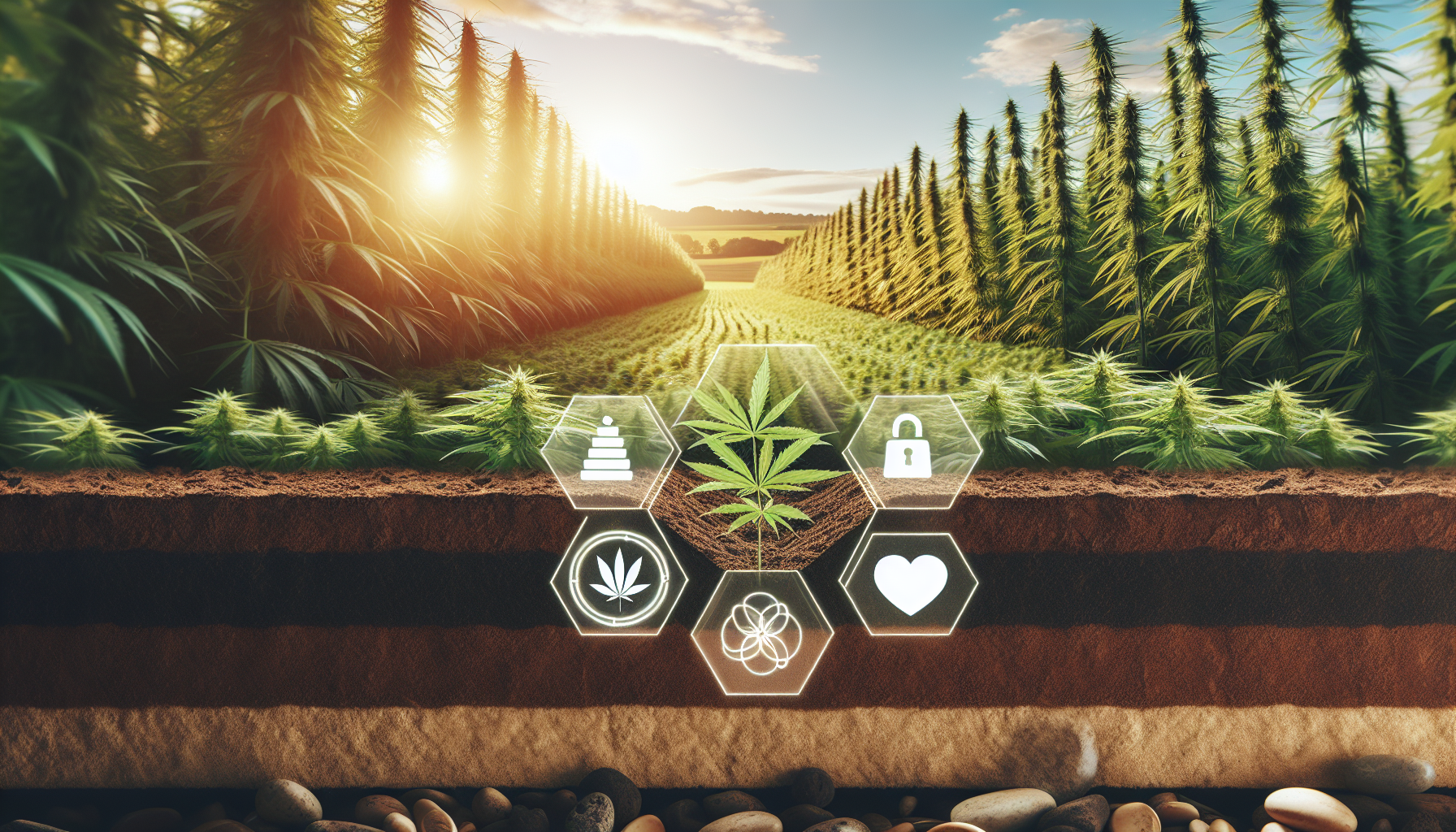
Hemp and soil health are tightly linked because industrial hemp can improve soil structure, support nutrient cycling, reduce erosion, and fit into lower-impact food production systems when it is grown and managed well. For consumers trying to understand the environmental impact of hemp food, soil health is the right place to start. Soil is not just dirt. It is a living system made up of minerals, organic matter, water, air, fungi, bacteria, insects, and plant roots. When that system functions well, farms hold more water, resist drought, cycle nutrients efficiently, and maintain productivity with fewer external inputs. When it degrades, food production becomes more fragile, more expensive, and often more polluting.
I have worked on agricultural content and sustainability education long enough to see a recurring pattern: shoppers often ask whether a crop is automatically sustainable simply because it is plant based. The honest answer is no. A crop’s environmental profile depends on how it is grown, where it is grown, what it replaces in rotation, and how it affects the land over time. Hemp is a strong candidate for more sustainable food systems, but the strongest claims come from its agronomy, not from marketing. Understanding how hemp interacts with soil helps consumers separate real benefits from broad assumptions and evaluate hemp seeds, hemp protein, and hemp oil with more confidence.
Industrial hemp generally refers to varieties of Cannabis sativa cultivated for fiber, grain, or other non-intoxicating uses, typically under strict legal thresholds for THC. In food systems, the relevant products are usually hemp hearts, hemp seed oil, protein powders, and ingredients used in beverages, snacks, and bakery products. Soil health refers to the continued capacity of soil to function as a vital living ecosystem that sustains plants, animals, and people, a definition aligned with the USDA Natural Resources Conservation Service. That definition matters because it frames soil health as function, not simply fertility. A soil can test high in nutrients and still be compacted, biologically weak, or erosion prone. Hemp’s value lies in how it can influence several of these functions at once.
This article serves as a hub for the environmental impact of hemp food by focusing on the soil dimension while connecting it to water use, inputs, crop rotations, and climate resilience. The central point is straightforward: hemp can be a useful soil-building crop in the right system, especially when integrated into diverse rotations and managed with sound conservation practices. It is not a universal fix, and it does not erase the footprint of processing, transport, or poor farming decisions. But when consumers ask whether hemp food can support more sustainable agriculture, the answer often begins beneath the surface, where roots, microbes, and organic matter shape the long-term health of farmland.
Why Hemp Is Often Considered a Soil-Friendly Crop
Hemp earns attention in sustainability discussions because of several agronomic traits that can benefit soil under practical farm conditions. It establishes quickly, produces substantial aboveground biomass, and develops a root system that can help maintain soil structure. In many regions, vigorous early growth allows hemp to compete with weeds, which may reduce reliance on herbicides compared with weaker or slower-establishing crops. For food-focused grain hemp, the exact effect depends on cultivar, planting density, climate, and harvest timing, but the broad pattern is consistent: a healthy hemp stand covers ground relatively fast, and covered ground is generally better protected ground.
That protection matters. Bare soil is vulnerable to wind erosion, rainfall impact, crusting, moisture loss, and nutrient runoff. A crop that shades the surface and leaves residue after harvest can reduce those risks. In fields where growers rotate hemp with cereals, legumes, or cover crops, I have seen hemp function as a useful break crop, interrupting pest cycles and adding diversity to root architecture and residue patterns. Diversity is a core principle of resilient soils. Different crops feed different microbial communities, access nutrients at different depths, and leave different kinds of residue. A rotation that includes hemp can therefore do more than produce a marketable food ingredient; it can alter the biological rhythm of the field in productive ways.
Still, hemp should not be romanticized. Its benefits are strongest when farmers avoid excessive tillage, maintain residue, manage nutrients carefully, and fit hemp into a broader soil stewardship plan. If hemp is grown in a system that leaves fields bare too long, overworks the seedbed, or mines nutrients without replenishment, the environmental advantage shrinks. Crop choice matters, but management matters more.
How Hemp Roots Influence Soil Structure and Organic Matter
One of hemp’s most important contributions to soil health comes from belowground activity. Hemp roots can penetrate and occupy a meaningful volume of soil, creating channels that support aggregation, aeration, and water infiltration. Soil aggregates are clusters of mineral particles bound together by organic matter, fungal compounds, and microbial byproducts. Stable aggregates are a hallmark of healthy soil because they improve pore space, reduce crusting, and allow roots and water to move more effectively. When growers describe a field as mellow, friable, or easy to work, they are often describing good aggregation in practical terms.
Roots help build that condition in two ways. First, they physically explore the soil, creating pathways and reducing the dominance of dense, sealed layers near the surface. Second, they release exudates, carbon-rich compounds that feed microbes in the rhizosphere. Those microbes, in turn, contribute to nutrient cycling and aggregation. Hemp is not unique in having root exudates, but a vigorous crop with a substantial root system can stimulate meaningful biological activity. After harvest, root residues remain in the soil and contribute carbon. Over time, repeated additions of plant residue can support soil organic matter, especially when paired with reduced disturbance and year-round cover.
It is important to keep expectations realistic. Building soil organic matter is slow. It depends on climate, texture, drainage, cropping intensity, and tillage. A single hemp crop will not transform degraded land. But within a rotation, hemp can be part of a measurable improvement strategy. Farmers often assess progress using indicators such as aggregate stability, infiltration rates, active carbon, bulk density, and soil respiration, along with standard nutrient testing.
| Soil health factor | How hemp can help | What limits the benefit |
|---|---|---|
| Soil structure | Roots create channels and support aggregate formation | Heavy tillage can destroy aggregates quickly |
| Erosion control | Fast canopy development protects the soil surface | Poor establishment leaves bare ground exposed |
| Organic matter inputs | Residue and root biomass add carbon to the system | Warm climates and intense disturbance speed decomposition |
| Water movement | Improved pore space can increase infiltration | Compaction and traffic can offset root benefits |
| Weed pressure | Dense stands may suppress competing weeds | Thin stands or poor timing reduce suppression |
Hemp in Crop Rotations, Nutrient Management, and Reduced Inputs
For the environmental impact of hemp food, the most credible sustainability benefits usually come from rotation effects rather than from the crop standing alone. A diverse rotation spreads pest pressure, changes rooting depth, and reduces the repetition that often drives disease and weed problems. Hemp can serve as a rotational crop between cereals, oilseeds, and legumes, and that variation can support healthier soils and more balanced nutrient demand. In practice, farmers value break crops because they can improve the performance of the crops that follow. Better tilth, altered pest dynamics, and improved water movement all have downstream benefits.
Nutrient management is another area where nuance matters. Hemp needs nutrients, especially nitrogen, phosphorus, potassium, and sulfur, and grain production can remove a meaningful amount from the field. Sustainable production does not mean zero fertilizer. It means matching nutrient supply to crop demand, using soil tests, accounting for manure or compost, and minimizing losses through volatilization, leaching, and runoff. In well-managed systems, hemp can fit into nutrient plans that rely partly on recycled organic amendments and legume credits from previous crops. That can reduce the need for synthetic inputs, but only when agronomy supports it. Overapplying fertility because hemp is viewed as a high-value crop would undermine the environmental case.
Input reduction also extends to weed and pesticide management. Hemp’s rapid early growth can suppress some annual weeds, particularly in dense stands for fiber and, to a lesser degree, grain. That trait may reduce herbicide dependence in some systems. However, it is not a guarantee. Perennial weeds, uneven emergence, and wet conditions can still create management problems. Likewise, while hemp is sometimes described as needing few pesticides, actual pressure varies by region and season. The responsible takeaway for consumers is that hemp can support lower-input food production, but only under conditions where farm management, cultivar choice, and local ecology align.
Water, Erosion, and the Wider Environmental Footprint of Hemp Food
Soil health connects directly to water use and water quality, two major concerns in food sustainability. Soils with better structure and more organic matter generally infiltrate water more effectively and store more of it for later plant use. That improves drought resilience and reduces runoff. Hemp can contribute to this by maintaining cover, supporting pore formation, and leaving residues that protect the surface. In practical terms, a field that absorbs rainfall is less likely to lose sediment and nutrients into nearby waterways. That matters for both farm productivity and downstream ecosystems.
Consumers often ask whether hemp is a low-water crop. The most accurate answer is that hemp’s water demand is moderate and context dependent. It is not a desert plant, and high yields require adequate moisture, especially during establishment and reproductive growth. But compared with some more input-intensive crops, hemp can perform well in rain-fed systems in suitable climates. The environmental gain comes less from an absolute claim of minimal water use and more from how healthy soils help use available water efficiently. Soil stewardship and crop choice work together.
It is also important to broaden the discussion beyond the field. The footprint of hemp food includes cleaning, dehulling, pressing, milling, packaging, and transportation. If a hemp product is grown in a soil-friendly system but then heavily processed or shipped long distances in inefficient formats, the overall advantage narrows. This is why a hub article on environmental impact must connect farm-level benefits with supply-chain realities. Soil health remains foundational because it shapes long-term agricultural viability, but consumers should evaluate hemp food as part of a full system that includes energy use, sourcing transparency, and farming practices documented by the brand.
What Consumers Should Look For When Evaluating Sustainable Hemp Foods
Consumers cannot inspect a field before buying hemp hearts or protein powder, but they can still make informed choices. Start with sourcing. Brands that identify where hemp is grown and explain their farming standards are generally more credible than brands relying on vague eco-language. Look for references to crop rotation, reduced tillage, cover crops, nutrient management plans, or regenerative practices grounded in actual farm methods. Organic certification can be useful because it restricts many synthetic pesticides and fertilizers, but it does not automatically confirm strong soil outcomes. A well-managed conventional rotation may outperform a poorly managed organic field on erosion or compaction.
Ask direct questions. Is the hemp grown in diversified rotations? Are farmers using soil testing and conservation practices? Is irrigation necessary, and if so, how is water managed? Does the company work with traceable regional suppliers? Serious brands usually have clear answers. They may also reference established frameworks such as USDA conservation programs, state extension guidance, or third-party verification related to responsible agriculture. Specificity is a trust signal. So is balance. Companies that acknowledge tradeoffs, such as variable yields or region-specific pest pressure, tend to be more reliable than those making absolute sustainability claims.
As a hub for the environmental impact of hemp food, this topic points readers toward related questions about carbon footprint, biodiversity, processing impacts, certifications, and responsible sourcing. The key idea is that hemp’s environmental promise is strongest when its food production supports living soils. Healthy soil improves resilience, reduces losses, and underpins lower-impact farming over time. If you buy hemp foods regularly, reward brands that explain how their crop is grown, not just what nutrients the package contains. Better consumer questions can push the market toward better farming, and that is where the most meaningful environmental benefit begins.
Hemp and soil health form a sustainable partnership when agronomy, not slogans, drives the conversation. Hemp can protect the soil surface, support aggregation, contribute residue, fit into diverse rotations, and help farms manage weeds and water more effectively. Those benefits make hemp food environmentally promising, especially in systems built around conservation practices and long-term soil function. They also explain why soil health is central to understanding the environmental impact of hemp food rather than a side issue.
The most important takeaway is balance. Hemp is not automatically sustainable in every field, climate, or supply chain. It still requires nutrients, careful establishment, and responsible processing after harvest. Yet in well-managed systems, it can be a practical crop that supports healthier farmland and more resilient food production. For consumers, that means the smartest buying decision is not based on a single green claim. It is based on evidence that the brand understands sourcing, rotation, inputs, and soil stewardship.
If you want hemp foods with a genuinely lower environmental footprint, start by looking for transparency about farming practices and soil care. Then explore the related topics in this consumer education hub, including water use, processing impacts, certifications, and sourcing standards. The more clearly you understand how hemp is grown, the easier it becomes to choose products that support both personal nutrition and healthier agricultural landscapes.
Frequently Asked Questions
Why is soil health so important when talking about hemp as a sustainable food crop?
Soil health is one of the best ways to understand the real environmental impact of hemp food because healthy soil supports nearly every part of a lower-impact agricultural system. Soil is not just a growing medium. It is a living ecosystem made up of minerals, organic matter, water, air, microbes, fungi, insects, and plant roots that all interact continuously. When that system functions well, it helps crops access nutrients more efficiently, improves water infiltration and retention, supports beneficial biological activity, and reduces the likelihood of erosion and runoff. That matters for hemp because a crop can only be considered truly sustainable if it works with these natural processes rather than degrading them over time.
Industrial hemp is often discussed as an environmentally promising crop because it can contribute to better soil structure, fit into crop rotations, and help keep fields biologically active. For consumers, this means the sustainability story of hemp food is not only about what the plant becomes after harvest, but also about what happens in the field while it grows. If hemp is managed well, it can be part of a farming approach that protects topsoil, supports long-term productivity, and reduces pressure on external inputs. In other words, soil health is the foundation that connects hemp production to broader goals like resilient food systems, water quality, and climate-smart agriculture.
How can hemp improve soil structure and reduce erosion?
Hemp can support soil structure in several practical ways. One of its most important contributions is root development. Hemp produces a strong root system that helps bind soil particles together, which can improve aggregation and create better pore space within the soil. Good soil structure matters because it allows water to move into the ground instead of running off the surface, and it helps air reach plant roots and soil organisms. Fields with stronger structure are generally more resilient during both heavy rain and dry periods.
Hemp can also reduce erosion by providing fast, vigorous above-ground growth that covers the soil surface relatively quickly. Bare soil is highly vulnerable to wind and water erosion, especially during seasonal storms or after tillage. A dense crop canopy helps cushion the impact of rainfall, reduces soil displacement, and lowers the chance that nutrient-rich topsoil will wash away. In rotational systems, hemp may also help interrupt periods when fields would otherwise remain exposed. That protection is especially valuable because topsoil forms slowly but can be lost very quickly if the land is left uncovered or poorly managed. The overall result is that hemp, when integrated thoughtfully, can help farmers preserve the physical integrity of their soil while supporting the long-term productivity of agricultural land.
Does hemp help with nutrient cycling and soil biology?
Yes, hemp can play a useful role in nutrient cycling, especially when it is grown as part of a diverse rotation rather than as a stand-alone solution. Nutrient cycling refers to the way essential elements such as nitrogen, phosphorus, and potassium move through soil, plants, microbes, and organic matter. Healthy soils depend on this cycle functioning efficiently. Hemp contributes by keeping living roots in the ground during the growing season, which helps feed soil microbes through root exudates. These compounds support microbial communities that are central to decomposing organic material, releasing nutrients, and helping build more biologically active soil.
After harvest, remaining plant material can also contribute organic residues that support future soil processes, depending on how the crop is managed. Over time, systems that maintain active root growth and return some biomass to the soil can help strengthen the biological engine that makes nutrients more available to crops. That said, hemp is not a magic crop that automatically rebuilds depleted land under every condition. Its benefits depend on factors such as soil type, climate, harvest method, residue management, and whether the farm uses regenerative practices like cover cropping, compost application, reduced tillage, or diversified rotations. The most accurate view is that hemp can support nutrient cycling and soil life as part of a broader soil-conscious management strategy.
Is hemp always sustainable, or does soil health depend on how it is grown?
Soil health depends heavily on how hemp is grown. While hemp has several characteristics that can make it a strong fit for sustainable agriculture, no crop is automatically sustainable in every context. Farming practices determine whether the outcome is positive, neutral, or harmful. For example, repeated intensive tillage can break down soil structure, accelerate organic matter loss, and leave fields more vulnerable to erosion, even if the crop itself has beneficial traits. Similarly, overuse of fertilizers, poor irrigation practices, or lack of crop diversity can undermine many of the environmental advantages people associate with hemp.
The most meaningful soil benefits tend to appear when hemp is part of a system designed to protect and improve the land over time. That includes practices such as rotating hemp with other crops, minimizing bare soil, managing residues carefully, reducing compaction, and supporting biodiversity both above and below ground. Local conditions matter too. A hemp crop in one region may improve field performance and soil function, while the same crop grown with different methods elsewhere may deliver fewer benefits. For consumers, this is an important distinction. It is more accurate to ask whether hemp is being produced in a soil-supportive system than to assume all hemp food comes from equally sustainable farms. Soil health is the measure that helps separate marketing claims from real agricultural outcomes.
What should consumers look for if they want hemp food products linked to healthier soils?
Consumers should look beyond simple sustainability labels and focus on signs that a brand or farm understands agriculture as a whole-system practice. The strongest indicators are transparency and specificity. Brands that can explain how their hemp is grown are generally more credible than those making broad environmental claims without details. Useful signals include mention of crop rotation, cover crops, reduced tillage, responsible nutrient management, biodiversity support, erosion control, and efforts to build organic matter. These practices show that the producer is paying attention to the living function of soil, not just yield or marketing language.
It is also helpful to look for companies that talk about sourcing relationships, regional farming conditions, and long-term land stewardship. Some may reference regenerative agriculture principles, third-party certifications, or partnerships with growers who track soil outcomes over time. While not every responsible farm will use the same terminology, the best messages are usually concrete rather than vague. Instead of saying a product is “eco-friendly,” a stronger brand will explain that hemp is rotated with other crops, grown in ways that reduce erosion, or managed to support soil biology and water efficiency. For consumers trying to make more informed choices, the key takeaway is simple: healthier soils often lead to more resilient farming systems, and brands that can clearly connect hemp production to soil stewardship are usually offering the most credible sustainability story.