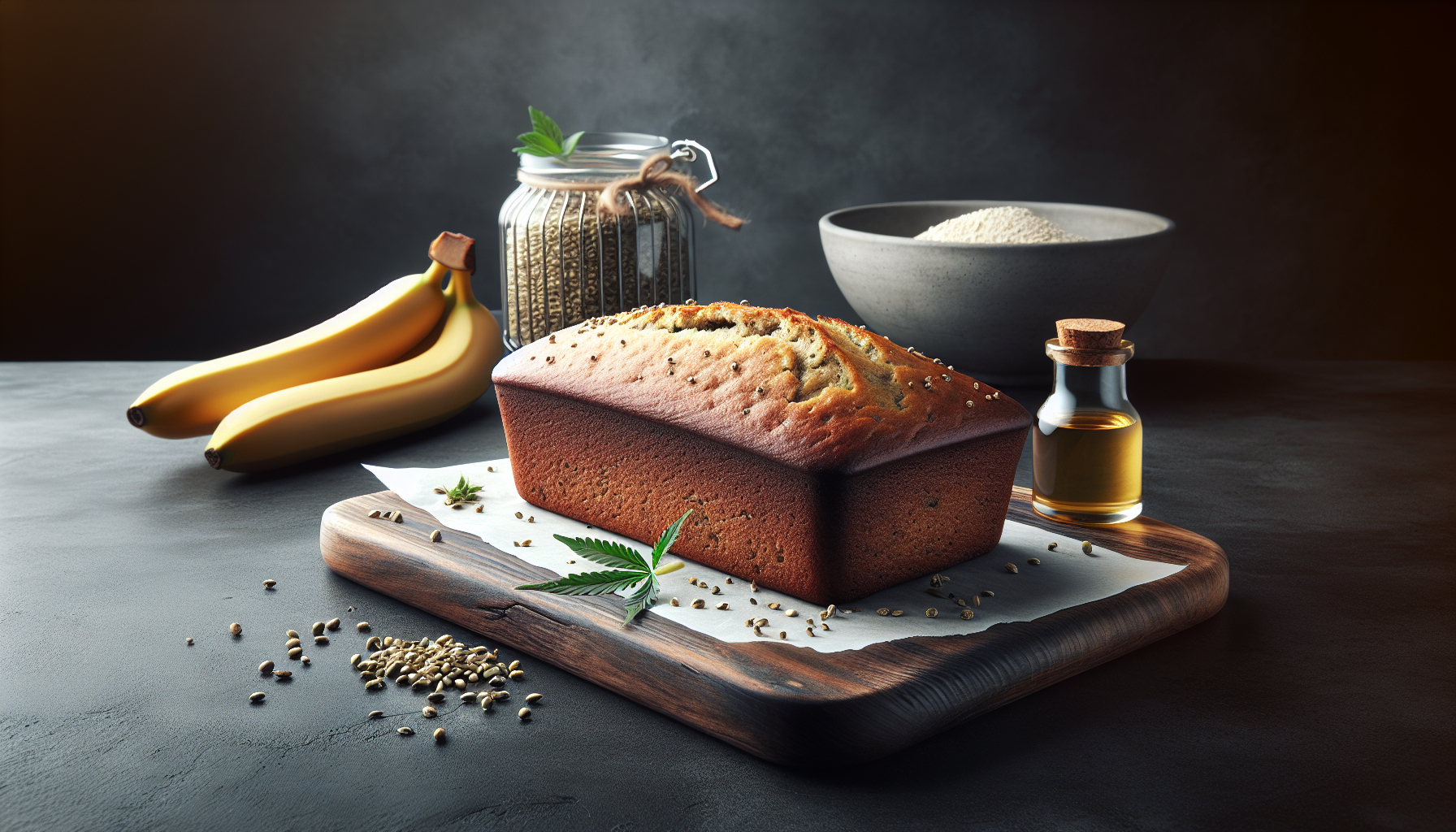
Hemp flour banana bread is one of the easiest, most reliable ways to start baking with hemp flour because ripe bananas add moisture, natural sweetness, and structure that balance hemp’s earthy flavor and high-fiber texture. In my test batches, banana bread consistently performs better than delicate cakes or plain muffins when I swap part of the regular flour for hemp flour, which is why this recipe style works so well as a practical entry point for home bakers. If you want a single guide that explains what hemp flour is, how it behaves in the oven, and how to use it successfully in everyday baking, this hub covers the essentials with banana bread as the anchor recipe.
Hemp flour is made from ground hemp seeds, usually after some oil has been pressed out, leaving a protein-rich, fiber-dense flour with a nutty taste and a darker color than white or whole wheat flour. It is naturally gluten-free, but that matters in a specific way: unlike wheat flour, hemp flour does not form the gluten network that traps gas and creates elasticity, so it rarely works well as a one-to-one replacement in classic baking formulas. Banana bread is forgiving because it relies less on strong gluten development and more on mashed fruit, eggs, chemical leavening, and a batter-style mixing method. That combination gives hemp flour room to contribute nutrition and flavor without collapsing the loaf.
This matters for anyone building a healthier baking routine without sacrificing texture. Hemp flour is notable for plant protein, minerals, and fiber, but nutrition claims only matter if the final loaf is moist, sliceable, and appealing enough to bake again. Searchers often ask the same core questions: Does hemp flour taste good? How much can you substitute? Why does it make bread dense? Can you bake with only hemp flour? The short answers are yes, in the right recipe; usually 15 to 30 percent of the flour blend; because it absorbs moisture and lacks gluten; and generally no, not for standard banana bread if you want a tender crumb. Understanding those fundamentals will save ingredients, reduce failed loaves, and make hemp flour a useful pantry staple rather than an expensive experiment.
What hemp flour does in banana bread
In banana bread, hemp flour acts more like a functional ingredient than a direct replacement for all-purpose flour. It adds a warm, slightly grassy, nutty flavor that pairs naturally with banana, cinnamon, walnuts, dark chocolate, and seeds. It also deepens the crumb color, often turning the loaf medium brown or olive-tan, which is normal and not a sign of overbaking. The biggest technical effect is absorption. Hemp flour pulls in more liquid than refined wheat flour, so batters thicken quickly and continue thickening as they sit. That means a recipe with hemp flour usually benefits from very ripe bananas, enough fat, and accurate oven timing.
From repeated testing, the sweet spot for most banana bread formulas is replacing about one-fifth to one-quarter of the total flour with hemp flour. At that level, the bread keeps enough structure from all-purpose or whole wheat flour while gaining the nuttiness and nutritional density hemp bakers want. Push the ratio too high and the loaf can become heavy, fragile, or gummy in the center even when the top looks done. This is especially common when bakers add hemp flour by volume without adjusting moisture, then overmix in an attempt to smooth out the batter. A thick batter is expected; a paste-like batter is usually a warning sign that the flour ratio is too aggressive.
Banana bread also benefits from hemp flour because bananas naturally contribute pectin, sugars, and moisture. Those qualities soften the drying effect that high-fiber ingredients sometimes create. In practical terms, hemp flour works best in recipes with strong supporting ingredients: bananas for moisture, eggs for binding, oil or butter for tenderness, and baking soda for lift. If you have baked dense quick breads before, you already know the pattern. Success comes from balancing absorbent ingredients with wet ones, not from treating every flour as interchangeable.
Best ingredient ratios and the core method
A dependable starting formula for hemp flour banana bread uses 1 cup mashed ripe banana, 2 eggs, 1/3 to 1/2 cup fat, 1/2 to 3/4 cup sugar or equivalent sweetener, and 1 1/2 cups total flour, with 1/4 to 1/3 cup of that flour coming from hemp flour. Add 1 teaspoon baking soda, 1/2 teaspoon salt, and optional cinnamon or vanilla. This structure works because bananas and eggs provide enough water and binding to carry the fiber load while the remaining wheat flour supplies the network hemp flour cannot create by itself. If you prefer whole grain flavor, combine hemp flour with whole wheat pastry flour rather than standard whole wheat, which can make the loaf too dense.
The method matters as much as the formula. Mash bananas thoroughly, whisk wet ingredients until smooth, then fold dry ingredients in just until no dry pockets remain. Resting the batter for five minutes before baking can help hemp flour hydrate evenly, but longer rests may overthicken the batter and reduce rise. Bake in a lined loaf pan at 350°F until a tester comes out with a few moist crumbs, usually 50 to 65 minutes depending on pan material, banana weight, and sugar level. Aluminum pans bake more evenly than dark nonstick pans, which can overbrown the edges before the center sets.
For bakers comparing substitution levels, the table below shows the practical tradeoffs I see most often in home ovens.
| Hemp Flour Share | Expected Texture | Flavor Impact | Recommended Use |
|---|---|---|---|
| 10% | Very close to standard banana bread | Mild nuttiness | Best for first-time bakers |
| 20% | Moist, slightly denser crumb | Balanced banana and hemp flavor | Ideal everyday ratio |
| 30% | Heavier loaf, tighter slices | Distinct earthy flavor | Works with extra-ripe bananas and careful mixing |
| 40%+ | Dense, fragile, sometimes gummy center | Strong hemp taste | Usually better for experimental baking than a classic loaf |
Common mistakes when baking with hemp flour
The most common mistake is assuming hemp flour can replace all the flour in a banana bread recipe. Because it contains no gluten-forming proteins in the way wheat does, the loaf loses structure fast as the percentage rises. The second mistake is underestimating moisture needs. If your bananas are small or only lightly speckled, they will not provide enough water or sweetness for a hemp-enhanced loaf. I use bananas that are heavily spotted or nearly black on the peel; they mash more smoothly and produce a better crumb.
Another frequent problem is overmixing. Bakers see a dark, slightly textured batter and keep stirring, thinking it should look as smooth as a boxed cake batter. That extra mixing develops the wheat flour that is present, while the hemp flour continues absorbing liquid, leading to toughness and poor rise. Measuring by weight helps avoid this. A cup of banana can vary widely, and a packed scoop of hemp flour can push a recipe out of balance. If you own a digital scale, use it. Consistency improves immediately.
Underbaking is also common because hemp flour darkens the loaf early. The top may look done 10 minutes before the center is set. Check internal doneness in the middle of the loaf, not near the edge. If the top browns too quickly, tent it loosely with foil for the final part of baking. Finally, do not skip cooling time. Hemp flour banana bread firms as it cools, and slicing too early can make a properly baked loaf seem gummy. Let it cool in the pan for about 15 minutes, then finish cooling on a rack before cutting.
Flavor pairings, nutrition, and storage
Hemp flour tastes best when paired intentionally. Banana is the obvious partner, but cinnamon, ginger, cardamom, espresso, cocoa, maple syrup, toasted pecans, walnuts, and dark chocolate all round out hemp’s earthy notes. I generally avoid delicate flavors like lemon or subtle vanilla-only formulas because hemp flour can dominate them. If you want a more dessert-like loaf, chocolate chips are one of the best additions because they soften the green, nutty edge and make the bread more broadly appealing to families.
On nutrition, hemp flour is valued for fiber and plant protein, and it usually contains useful amounts of minerals such as magnesium and iron, though exact values depend on the brand and degree of oil extraction. It is not a miracle ingredient, and the finished loaf is still banana bread, not a protein bar. But compared with a loaf made entirely from refined flour, a well-formulated hemp flour banana bread can offer a more satisfying texture and better nutrient density. For readers exploring more wholesome baking, this hub fits naturally with other Recipes and Cooking Tips content on flour alternatives, quick bread mixing, and ingredient substitutions.
Storage is straightforward but important because hemp products can lose freshness faster than standard flour due to residual oils. Keep hemp flour sealed, cool, and away from light; many bakers refrigerate or freeze it to preserve flavor. The baked banana bread keeps at room temperature for two to three days if wrapped well, in the refrigerator for about a week, and in the freezer for up to three months. I slice before freezing so individual pieces can be thawed quickly. That is especially useful if you are batch baking for breakfasts or snacks.
How this hub supports broader baking with hemp flour
As a sub-pillar hub under Recipes and Cooking Tips, this page should help readers branch into the wider topic of baking with hemp flour, not just a single loaf. The key principle that carries into muffins, pancakes, snack cakes, and cookies is substitution discipline. Start low, usually 10 to 25 percent of the flour blend, then adjust based on the recipe’s moisture and structure. Wet, forgiving batters handle hemp flour better than lean doughs. That is why banana bread, zucchini bread, and breakfast muffins usually succeed sooner than sandwich bread or airy layer cake.
There are also practical category differences. In muffins, hemp flour behaves similarly to banana bread but bakes faster and can dry out sooner, so smaller pan size means tighter time control matters. In pancakes, hemp flour adds nuttiness and color but should be used modestly to avoid heavy, rubbery results. In cookies, it can work well in oatmeal, peanut butter, or chocolate formulas where a dense chew is acceptable. In yeast baking, however, hemp flour is best treated as a minor enrichment flour unless you are following a tested gluten-free system with binders such as psyllium husk or xanthan gum.
If you are building your own recipe collection, make banana bread your benchmark. Once you know how your preferred hemp flour brand behaves in that loaf, you can predict how it will act in other bakes. Different brands vary in fineness, protein content, and residual oil, and those differences show up clearly in quick bread crumb. Use this hub as your foundation, then expand to related recipes with the same mindset: moderate substitution, strong moisture support, measured expectations, and flavors that complement hemp rather than fight it.
Hemp flour banana bread succeeds because it uses the right ingredient in the right format. Hemp flour brings nutty flavor, fiber, and protein, but it needs support from bananas, eggs, fat, and a balanced flour blend to produce a loaf that rises well and slices cleanly. The most important takeaway is simple: do not use hemp flour as a full replacement for wheat flour in standard banana bread. For most home bakers, a 20 to 25 percent substitution delivers the best mix of flavor, nutrition, and texture.
The broader lesson for baking with hemp flour is that recipe context matters more than trends or packaging claims. Quick breads are forgiving, moisture-rich, and ideal for learning how hemp flour absorbs liquid and affects crumb. Start with very ripe bananas, measure carefully, avoid overmixing, and bake until the center is truly set. Once you can repeat that process confidently, you can apply the same principles to muffins, pancakes, cookies, and other recipes across your kitchen. That is how hemp flour becomes a useful tool instead of a frustrating novelty.
If you are exploring better-for-you baking, use this hub as your starting point and bake one test loaf this week. Keep the substitution moderate, take notes on texture and flavor, and build from there. A good hemp flour banana bread does more than solve overripe bananas; it teaches the fundamentals of baking with hemp flour in a way that is practical, repeatable, and worth returning to.
Frequently Asked Questions
Why does hemp flour work so well in banana bread?
Hemp flour works especially well in banana bread because the recipe naturally includes ingredients that help offset hemp flour’s most noticeable traits. Hemp flour has an earthy flavor, a darker color, and a high-fiber texture that can make delicate baked goods seem dry, dense, or slightly gritty if you use too much of it. Banana bread solves many of those issues on its own. Ripe bananas contribute moisture, natural sugars, and body, which help create a softer crumb and a more balanced flavor. The banana flavor also blends well with hemp flour’s nuttier, more rustic taste, so the final loaf feels intentional rather than overly “healthy” or heavy.
From a baking standpoint, banana bread is also forgiving. Unlike a light cake or a tender muffin that depends on a very fine crumb, banana bread is expected to be moist, hearty, and substantial. That makes it an ideal recipe for experimenting with partial hemp flour substitution. In practice, many home bakers find banana bread to be one of the easiest and most reliable first recipes when learning how hemp flour behaves. If you want a baked good that highlights hemp flour’s nutritional appeal without fighting its texture, banana bread is one of the smartest places to start.
How much hemp flour should I use in banana bread?
A partial substitution is usually the best approach. In most banana bread recipes, replacing about 15% to 25% of the regular flour with hemp flour gives you the benefits of hemp flour without overwhelming the loaf. This range typically adds a pleasant nutty depth, boosts fiber and protein, and keeps the bread moist enough to slice well. If you are new to baking with hemp flour, starting on the lower end is a smart move because it lets you see how the flavor and texture change without risking a loaf that turns too dense.
Using too much hemp flour can lead to a heavier, more compact bread because hemp flour does not behave like all-purpose flour. It contains little to no gluten-forming potential and absorbs moisture differently, so a full replacement usually does not produce the soft, cohesive structure most people expect from banana bread. If you want to increase the percentage over time, do it gradually and pay attention to the batter consistency, bake time, and final crumb. A modest substitution almost always delivers the best balance of flavor, structure, and reliability for home bakers.
Will hemp flour make banana bread taste too earthy or bitter?
Not if you use it thoughtfully. Hemp flour does have a distinct earthy, nutty flavor, but in banana bread that flavor is usually softened by the sweetness and aroma of ripe bananas. Brown sugar, maple syrup, cinnamon, vanilla, and add-ins like walnuts or chocolate chips can also help round out the flavor profile. Instead of tasting bitter, the bread often comes across as deeper and more wholesome, with a slightly toasted, whole-grain character that pairs naturally with banana.
The key is not to overdo the hemp flour. When the substitution level stays moderate, the loaf tends to taste balanced and pleasant. If you use too much, the bread can become more assertive in flavor and heavier in texture, which some people interpret as bitterness even when it is really just hemp flour’s strong earthy note. Using very ripe bananas is one of the easiest ways to improve the flavor because they add more natural sweetness and a fuller banana aroma. If flavor is your main concern, begin with a smaller amount of hemp flour and build from there based on your preference.
Do I need to change the liquid or other ingredients when baking banana bread with hemp flour?
Sometimes, but usually only slightly. Hemp flour tends to make batters feel thicker because of its fiber content, so you may need a small adjustment depending on the recipe and how much hemp flour you use. In many cases, the moisture from mashed bananas, eggs, butter or oil, and any added yogurt or milk is enough to support a modest substitution without major changes. That is another reason banana bread is such a practical starting point: it already contains ingredients that help create a moist, flexible batter.
If your batter looks unusually stiff after adding hemp flour, you can often correct it with a small splash of milk, a spoonful of yogurt, or an extra bit of mashed banana. It is better to make tiny adjustments than large ones. You should also avoid overmixing, since that can make banana bread tougher regardless of the flour blend. Keep in mind that hemp flour may darken the loaf and can sometimes slightly extend the baking time if the batter is thicker. The best indicator of doneness is still the center of the loaf: a tester should come out with a few moist crumbs, not wet batter.
Is hemp flour banana bread healthy?
Hemp flour banana bread can be a more nutrient-dense option than standard banana bread, especially when hemp flour replaces part of the refined flour. Hemp flour is valued for its fiber, plant protein, and mineral content, so it can add more nutritional substance to a familiar quick bread. Bananas also contribute potassium, moisture, and natural sweetness, which can reduce the need for excessive added sugar in some recipes. When these ingredients are combined in a balanced recipe, the result is often a loaf that feels more satisfying and hearty than a purely white-flour version.
That said, “healthy” depends on the full recipe and your goals. Banana bread can still contain sugar, oil, butter, or mix-ins like chocolate chips, so it is best to think of hemp flour banana bread as a smarter upgrade rather than a health food by default. It can absolutely be part of a balanced diet, especially if you control portion size and use quality ingredients. For many bakers, the biggest advantage is that hemp flour makes a classic comfort bake more filling and nutritionally interesting without making it difficult to prepare or unpleasant to eat.